Important Details About Return to Player

Return to Player, usually referred to as RTP, is among the most valuable figures we examine when reviewing online casino games https://lotto-au.casino/. At Lotto Casino, we treat it as a central data point rather than a pledge. RTP describes the theoretical proportion of total wagered money a game is predicted to return to players over a massive number of rounds. It does not predict a single session. Understanding this nuance helps Australian players make better comparisons between games without relying on misleading patterns or short-term observations.
The Return to Player Really Measures
RTP is a statistical expectation integrated into a game’s design. If a pokie shows an RTP of 96%, the mathematical model indicates that for every $100 wagered across all players and many spins, the game yields roughly $96 in prizes. The remaining $4 represents the theoretical house edge. We consider this framing helpful because it turns an abstract percentage into a direct cost estimate over the long run, but it must not be understood as a per-person outcome.
The figure is aggregate by nature. It includes millions or billions of simulated or real rounds, based on how the developer and testing body determine it. For that reason, RTP does not tell a player what will happen in the next hour. We often see players interpret a 96% RTP as a certainty that a $100 deposit will leave them with $96, which is inaccurate. The return is spread unevenly across a large player base.
We also differentiate RTP from return on a specific stake. A single spin can produce 0%, 500%, or any other outcome. RTP only turns meaningful as the number of rounds increases. At Lotto Casino, we therefore characterize it as a long-run property of the game, not a short-run promise. This perspective is crucial when comparing slots, table games, and live dealer products across an Australian online casino library.
The Difference Between Theoretical RTP and Short-Term Results
Short-run results can deviate sharply from theoretical RTP. A 96% slot may return 40% in a short session or pay several large wins that raise the result above 150%. We witness this frequently in real play. Variance, not RTP, dominates small sample sizes. That is why we avoid using a single session to assess whether a game is loose or tight, and we urge Australian players to focus on thousands of rounds rather than dozens.
The house edge is just the counterpart of RTP. A game with 97% RTP has a 3% theoretical house edge. That edge does not imply the casino takes precisely $3 from every $100 bet in real time. It means the mathematical advantage builds gradually across all wagering activity. We view the house edge as the cost of playing, similar to a spread in financial markets, but it is not a fixed per-hand charge.
We caution readers against treating an RTP figure as a target to chase. If you have lost several hands in a row, the game is not suddenly obligated to correct the balance. The RTP already assumes those losing streaks and winning runs across the full distribution. At Lotto Casino, we regard this as the most significant factual distinction between the long-run model and the experience of an individual player during any given evening.
How RTP Is Determined in Aussie Online Casinos
Calculating RTP begins with the game’s rules and paytable. For pokies, developers outline every possible reel combination or random number outcome and allocate a probability. They then times each payout by its probability and total the results. That total, shown as a percentage of the total wagered, is the theoretical RTP. It is usually verified through simulation before a game enters the market.
Table games follow a similar logic but with fixed probabilities. In European roulette, for example, a straight-up bet offers 35 to 1 while the probability of winning is 1 in 37. The resulting RTP is 97.3%. In blackjack, the percentage relies on the specific rules and the player’s decisions. We regard optimal strategy part of that calculation, because poor choices can diminish the effective return well below the listed figure.
At Lotto Casino, the RTP values we cite come from licensed game developers and, where relevant, independent testing laboratories. Australian-facing platforms run under strict compliance requirements, and game files cannot be casually altered after certification. We use these published figures to help players judge whether a casino product suits their preferences. Still, we suggest checking the in-game information because some games offer multiple return settings.
Variance, Hit Frequency and Its Relationship to RTP
RTP reveals nothing about how winnings are distributed. Two pokies can both list 96% RTP, yet one may award frequent small wins while the other generates long dry spells and occasional large payouts. We classify that difference as volatility. A high-volatility game demands a larger bankroll to absorb swings, even though the theoretical return aligns with a low-volatility title.
Hit frequency is another metric we track. It measures the percentage of spins or rounds that produce any win, regardless of size. A game can feature a high hit frequency but lower RTP if the average win is small. Conversely, a low hit frequency can be paired with a competitive RTP if rare wins are substantial. We find that reviewing both figures offers players a clearer sense of a game’s rhythm.
At Lotto Casino, we suggest combining RTP with volatility and hit frequency before deciding what to play. Theoretical return reveals what to expect over time, but volatility tells you what the path might feel like. An analytical review should not isolate these variables. Australian players who enjoy longer, steadier sessions may gravitate toward lower volatility, while those seeking larger swings may tolerate a more uneven distribution.
RTP Ranges Across Standard Casino Game Categories
RTP differs meaningfully by game category, and these ranges enable us make quick comparisons. A two-point difference in a pokie might look small, but over sustained play it alters the theoretical cost. We have collected the following common ranges from certified game data and standard table probabilities. The ranges below indicate typical values, not guarantees for every title at Lotto Casino.
- Online pokies: usually 92% to 97%, with progressive jackpot titles often lower due to the jackpot contribution.
- Blackjack: usually above 99% when basic strategy is applied to favourable rules.
- European roulette: 97.3%; American roulette: 94.74% because of the extra double zero.
- Video poker: commonly 95% to over 99%, depending on the specific pay table.
- Live game shows: usually 90% to 97%, with wide variation between bonus rounds and main bets.
These differences are not merely academic. Choosing a game with a higher theoretical RTP can cut expected losses over time. However, we caution players that volatility and hit frequency also influence the experience. A high-RTP blackjack table can still produce losing sessions, while a lower-RTP progressive slot could offer a rare life-changing prize. We therefore utilize RTP ranges as a starting point for comparison, not as the only quality measure.
Ways to Check and Confirm RTP Claims at Lotto Casino
Most approved online games show their calculated RTP in the help or details menu. We recommend viewing that screen before wagering. The figure is typically given as a percentage and occasionally includes separate values for primary and side bets. If a game lacks this information clearly, it may still be obtainable from the studio’s official documentation. At Lotto Casino, we prefer titles that make this data accessible rather than hidden.
Independent testing laboratories examine the mathematics behind these games. They confirm that the random number generator and payout structure align with the advertised return. Licensed Australian-facing casinos are expected to work with games that have undergone such certification. We view this as a practical safeguard. It implies the RTP you read is not simply a marketing number; it is the identical model that regulators and testers have evaluated.
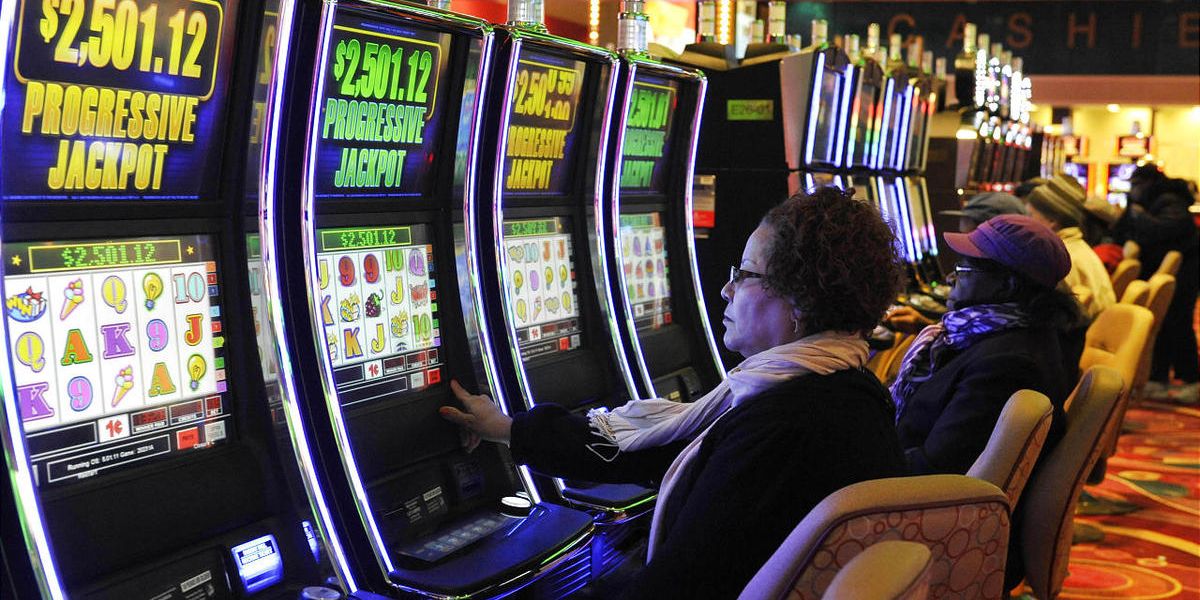
No casino changes RTP from one player to the next. The established return is integrated in the game version offered by the studio. If we have any question about a title’s stated RTP, we check the test certificate or the studio’s published game sheet. Players can also ask support for clarification. We see transparency here as a sign of a reliable online casino operation.
Responsible Play: Leveraging RTP Without Overestimating It
RTP is a benchmark, not a method for projecting gains. We use it to estimate the estimated price of a session or to compare comparable titles. That is where its utility. No RTP percentage can beat the house edge in negative-expectation games over the long term, and no method can promise a profit. We suggest establishing deposit, loss, and time limits prior to launching a game.
A greater RTP may reduce anticipated losses, but it does not eliminate them. Even a 99.5% video poker game has a house edge, no matter how small. We notice that players occasionally exaggerate the real-world impact of a small percentage difference. In a short playing period, variance will take over. Throughout years of intensive play, that gap becomes more visible, but it still cannot transform entertainment spending into an expected income.

At Lotto Casino, we urge players to treat RTP as an element of a wider responsible gambling approach. Review the game’s rules, volatility, and terms before wagering. Utilize the data to select products that match your budget and temperament. If the information seems unclear, slow down and evaluate a few titles. A calm, logical reading of RTP is more valuable than relying on hunches or temporary trends.